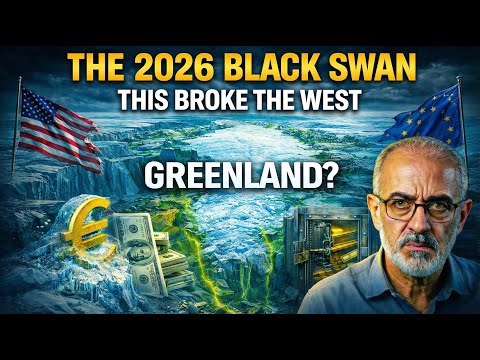
In this strategic scenario analysis, we conduct a stress test of the global economic system through a hypothetical “2026 Black Swan” centered on Greenland and the global rare earth supply chain.
This is not a report of current events.
It is a structured simulation designed to push existing treaties, incentives, and supply chains to their logical breaking points.
By examining a potential standoff over the Kvanefjeld (Kuannersuit) rare earth deposit, this analysis explores how unresolved friction between the United States, Europe, and local Greenlandic authorities could trigger a systemic repricing of risk across the global economy. The focus is not on headlines, but on structures: geography, balance sheets, and strategic incentives that do not change with political messaging.
We model how the weaponization of critical resources may expose the fragility of the “Just-In-Time” global supply chain model, posing an existential challenge to the electric vehicle and advanced manufacturing ecosystem in Europe and Japan. Special attention is given to the role of light rare earth elements—Neodymium and Praseodymium—and why their scarcity would act as a force-majeure-like constraint on industrial production rather than a typical cyclical shock.
This briefing traces three primary financial contagion vectors through which a localized geopolitical escalation could propagate globally:
Vector One – Supply Shock:
A raw material bottleneck that disrupts EV manufacturing, defense production, and green energy infrastructure, creating severe cost-push inflation and stagflationary pressure.
Vector Two – Fracture of Trust:
Escalating transatlantic tension undermining confidence in the Euro, accelerating FX volatility, widening trade frictions, and driving capital toward perceived liquidity havens.
Vector Three – Bond Market Stress:
An inflationary shock colliding with restrictive monetary policy, triggering a bond market revolt and a bear steepening of the yield curve as investors demand higher risk premiums in an increasingly unstable system.
The analysis also explores why, under such conditions, markets tend to abandon efficiency in favor of resilience—marking a transition from a “Just-In-Time” world to a “Just-In-Case” global economy. In this environment, supply chain redundancy replaces optimization, alliances become conditional, and the cost of capital rises structurally rather than cyclically.
Finally, this scenario examines how asset classes historically respond to periods of systemic stress. We assess why central banks have increased gold accumulation, how a strengthening US dollar can function as a global wrecking ball rather than a sign of economic health, and why equity markets tend to bifurcate sharply between strategic sectors and consumption-dependent industries.
This scenario does not attempt to predict outcomes.
Its purpose is to reveal existing structural fragilities within the global system—fragilities that become visible only when incentives collide and uncertainty replaces cooperation.
???? TIMESTAMPS
00:00 The 2026 Black Swan: A Stress Test Scenario
00:46 Geography & the Balance Sheet: Rare Earths in Greenland
01:36 China’s Supply Chain Leverage vs. Europe’s Strategic Dilemma
02:24 The Diplomatic Trap: The 1951 Defense of Greenland Agreement
03:32 The GIUK Gap: Security Imperatives vs. Economic Survival
04:12 A Supply Shock That Rivals the 1970s Oil Crisis
05:15 Vector One: EV Supply Chain Stress & Stagflation Risk
07:03 Vector Two: FX Volatility and the Fracture of Trust
08:12 Vector Three: Bond Market Stress & the Yield Curve
09:54 Gold: The Asset Without Counterparty Risk
10:54 The Dollar Milkshake Effect in Systemic Crises
11:54 Equity Market Bifurcation: Fragility vs. Strategic Power
13:49 Conclusion: Resource Realism and the Repricing of Risk
ℹ️ ABOUT THIS SCENARIO
This video presents a hypothetical future scenario based on publicly available geopolitical agreements, geological data regarding the Kuannersuit plateau, historical strategic doctrines (including the 1951 Defense of Greenland Agreement), and macro-financial modeling.
The analysis serves as a stress test for investors seeking to understand systemic risk during the transition from globalization toward a more security-driven, resource-constrained economic order. It does not reference or imply real-time military movements or classified information.
⚠️ DISCLAIMER
This content is for educational and analytical purposes only and does not constitute financial, investment, or legal advice.
The events described are fictional war-game simulations designed to explore structural risk, not to forecast real-world outcomes.
Viewers should conduct their own due diligence before making any financial decisions.
#greenland #geopolitics #blackswan #rareearths #economiccrisis #gold
This is not a report of current events.
It is a structured simulation designed to push existing treaties, incentives, and supply chains to their logical breaking points.
By examining a potential standoff over the Kvanefjeld (Kuannersuit) rare earth deposit, this analysis explores how unresolved friction between the United States, Europe, and local Greenlandic authorities could trigger a systemic repricing of risk across the global economy. The focus is not on headlines, but on structures: geography, balance sheets, and strategic incentives that do not change with political messaging.
We model how the weaponization of critical resources may expose the fragility of the “Just-In-Time” global supply chain model, posing an existential challenge to the electric vehicle and advanced manufacturing ecosystem in Europe and Japan. Special attention is given to the role of light rare earth elements—Neodymium and Praseodymium—and why their scarcity would act as a force-majeure-like constraint on industrial production rather than a typical cyclical shock.
This briefing traces three primary financial contagion vectors through which a localized geopolitical escalation could propagate globally:
Vector One – Supply Shock:
A raw material bottleneck that disrupts EV manufacturing, defense production, and green energy infrastructure, creating severe cost-push inflation and stagflationary pressure.
Vector Two – Fracture of Trust:
Escalating transatlantic tension undermining confidence in the Euro, accelerating FX volatility, widening trade frictions, and driving capital toward perceived liquidity havens.
Vector Three – Bond Market Stress:
An inflationary shock colliding with restrictive monetary policy, triggering a bond market revolt and a bear steepening of the yield curve as investors demand higher risk premiums in an increasingly unstable system.
The analysis also explores why, under such conditions, markets tend to abandon efficiency in favor of resilience—marking a transition from a “Just-In-Time” world to a “Just-In-Case” global economy. In this environment, supply chain redundancy replaces optimization, alliances become conditional, and the cost of capital rises structurally rather than cyclically.
Finally, this scenario examines how asset classes historically respond to periods of systemic stress. We assess why central banks have increased gold accumulation, how a strengthening US dollar can function as a global wrecking ball rather than a sign of economic health, and why equity markets tend to bifurcate sharply between strategic sectors and consumption-dependent industries.
This scenario does not attempt to predict outcomes.
Its purpose is to reveal existing structural fragilities within the global system—fragilities that become visible only when incentives collide and uncertainty replaces cooperation.
???? TIMESTAMPS
00:00 The 2026 Black Swan: A Stress Test Scenario
00:46 Geography & the Balance Sheet: Rare Earths in Greenland
01:36 China’s Supply Chain Leverage vs. Europe’s Strategic Dilemma
02:24 The Diplomatic Trap: The 1951 Defense of Greenland Agreement
03:32 The GIUK Gap: Security Imperatives vs. Economic Survival
04:12 A Supply Shock That Rivals the 1970s Oil Crisis
05:15 Vector One: EV Supply Chain Stress & Stagflation Risk
07:03 Vector Two: FX Volatility and the Fracture of Trust
08:12 Vector Three: Bond Market Stress & the Yield Curve
09:54 Gold: The Asset Without Counterparty Risk
10:54 The Dollar Milkshake Effect in Systemic Crises
11:54 Equity Market Bifurcation: Fragility vs. Strategic Power
13:49 Conclusion: Resource Realism and the Repricing of Risk
ℹ️ ABOUT THIS SCENARIO
This video presents a hypothetical future scenario based on publicly available geopolitical agreements, geological data regarding the Kuannersuit plateau, historical strategic doctrines (including the 1951 Defense of Greenland Agreement), and macro-financial modeling.
The analysis serves as a stress test for investors seeking to understand systemic risk during the transition from globalization toward a more security-driven, resource-constrained economic order. It does not reference or imply real-time military movements or classified information.
⚠️ DISCLAIMER
This content is for educational and analytical purposes only and does not constitute financial, investment, or legal advice.
The events described are fictional war-game simulations designed to explore structural risk, not to forecast real-world outcomes.
Viewers should conduct their own due diligence before making any financial decisions.
#greenland #geopolitics #blackswan #rareearths #economiccrisis #gold
- Category
- ICELAND
- Tags
- Greenland Crisis 2026, Black Swan Event, Rare Earth Supply Shock
Commenting disabled.
Up Next
-

DE Shouted FM Break
-
1:02:05
GREENLAND TRAVEL DOCUMENTARY | East Greenland
-
01:07
How the U.S. Could Take Control of Greenland — And Why NATO Is Nervous #trump #greenland #nato
-
04:31
City Break Haugesund Norway
-
10:13
GREENLAND CRUISE NEVER STOPS IN GREENLAND - CRUISE NEWS
-
46:42
The importance of being kind and the economy of convenience
-
02:30

Lindesnes Trekkspillklubb - Polkan går
-
03:12

Lindesnes Trekkspillklubb Jubileumsvalsen
-
05:00

Lindesnes Trekkspillklubb nr. 1.wmv
-
03:24
Lindesnes Trekkspillklubb - Lappland
-
42:52

Take Your Motorcycle to ICELAND | Full Guide | Life on Board the Smyril Line Norröna Ferry
-
38:57

Iceland EP1 กลับมาแล้วจ้าหลังขอแต่งกลางห้าง! ไอซ์แลนด์หนาวจุง